
The Role of Rice in Indian Festivals
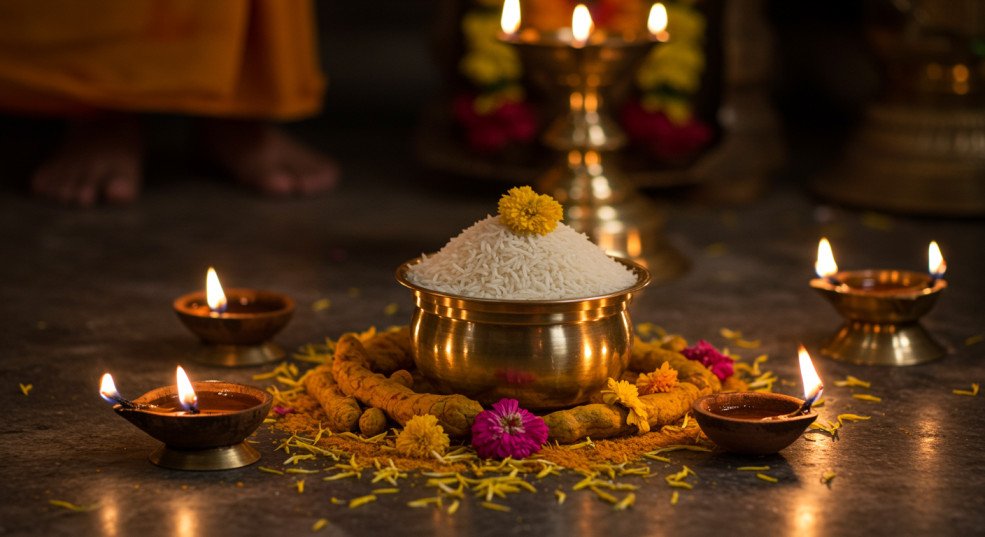
A Grain That Holds a Nation’s Celebrations Together
If you close your eyes during any Indian festival, you’ll notice that celebration has a sound; laughter echoing through open doors, bells chiming softly in temples, diyas crackling, and somewhere in the background, rice being washed, steamed, offered, or sprinkled as blessings. It’s the quiet heartbeat of our rituals, present in moments of joy, devotion, gratitude, and even new beginnings.
For centuries, rice has been more than food in India. It has been a symbol of prosperity, purity, fertility, and divine grace. No matter which part of India you belong to, this grain has touched your festivals in ways both big and beautifully small.
And this is the story of how.
Rice in Ancient India: A Sacred Symbol Before It Became Food
Long before rice filled our plates, it filled our prayers.
Archaeologists have found evidence of rice cultivation in the Indus Valley Civilization, dating back over 5,000 years. Ancient scriptures — from the Yajurveda to the Atharvaveda — mention rice as anna, the life-giving food blessed by the gods.
In Vedic rituals, rice was:
- Offered in yagya fires
- Used to bless newly built homes
- Placed near idols during pujas
- Considered a symbol of Lakshmi, the goddess of fortune
In fact, ancient beliefs said:
“Where rice resides, abundance resides.”
That reverence travelled across dynasties, kingdoms, and centuries — becoming part of every celebration India knows today.
Rice as a Blessing: Why It Appears in Almost Every Ritual
Across India, rice is used in rituals not for convenience, but for meaning.
Purity: Rice is considered naturally pure, especially when unbroken (akshata). That’s why dry, uncooked rice is used in weddings, pujas, baby showers, and temple ceremonies.
Prosperity: Rice represents abundance — the hope that life will always remain full.
New Beginnings: Sprinkling rice or offering it to deities symbolizes inviting good fortune into fresh chapters.
Fertility and Growth: In many regions, rice is tied to prayers for prosperity in the family and farm fields.
Continuity of Tradition: Every festival has its own rice ritual, passed down like family heirlooms.
It’s a symbolic language—one every Indian understands without needing words.
Rice in Major Indian Festivals
From the snowy villages of Kashmir to the coastlines of Tamil Nadu, rice follows festivals like a trusted companion.
Here’s how the grain celebrates with us across the country.
Makar Sankranti / Pongal / Lohri / Bihu
The harvest season is incomplete without rice.
Pongal (Tamil Nadu): Houses overflow with colour and steam. Newly harvested rice is cooked with jaggery and milk to make Sakkarai Pongal, symbolising overflowing prosperity. The moment the pot boils over, families cheer “Pongalo Pongal!” as a blessing.
Bihu (Assam): Traditional pithas like tekeli pitha and ghila pitha are made from rice flour, celebrating agricultural abundance.
Makar Sankranti (North India): Sweet rice, khichdi, and offerings of rice and sesame signify gratitude for a successful harvest.
Lohri (Punjab): Though popular for sugarcane and revdi, Lohri also includes offerings of puffed rice to the sacred fire.
Across states, rice marks gratitude to the Earth.
Diwali: The Festival of Lights and Lakshmi’s Grain
Diwali rituals across India feature rice in subtle but powerful ways.
- Rangoli borders made using coloured rice flour
- Akshata (turmeric-coated rice) sprinkled during Lakshmi puja
- Coins placed on rice before lighting lamps
- Tulsi puja rituals involving rice grains
Each gesture asks for the same blessing: prosperity that continues like grains in a harvest.
Durga Puja & Navratri (East, West & North India)
Rice plays a central role in the worship of feminine divine energy.
In Bengal: During Durga Puja, rice grains are used in the Anjali ritual, offered with flowers. Bhog is incomplete without fragrant rice served with ghee, khichuri, and payesh.
In Gujarat: Navratri prasad includes rice-based dishes like khichdi and lapsi.
In North India: Rice grains are spread in kalash sthapana (the starting ritual), symbolizing the creation of life.
Onam: Kerala’s Celebration of Abundance
The majestic Onam Sadya, arranged on banana leaves, is deeply tied to rice:
- Matta rice forms the heart of the feast
- Payasam is made using broken rice
- Rice flour is used in pookalam (flower rangoli) designs by some communities
- Offerings to King Mahabali traditionally include grains and rice dishes
Onam proves that rice isn’t just eaten — it’s honoured.
Gudi Padwa, Baisakhi, Ugadi, Vishu
Harvest and new-year celebrations across states use rice in distinct ways.
Ugadi (Karnataka, Andhra Pradesh): Rice is used to prepare pulihora, payasam, and the famous Ugadi pachadi meal.
Vishu (Kerala): The Vishu Kani arrangement includes rice as a sign of prosperity for the year.
Baisakhi (Punjab): Families cook rice dishes as a thanksgiving gesture for the new harvest.
Gudi Padwa (Maharashtra): While the gudi takes centre stage, rice-based sweets mark new beginnings.
Weddings & Auspicious Ceremonies in Every State
No Indian wedding exists without rice.
- Rice is showered over the bride and groom for blessings
- Brides step into their new home by knocking over a pot of rice
- Rice is used in haldi ceremonies
- Dry rice (akshata) is used by elders to bless couples
- South Indian weddings include rice offerings like akshata, talambralu, and annadanam
In every gesture, rice becomes a silent prayer.
Housewarmings, Baby Showers, and Pujas
Across regions:\
- Griha Pravesh: Families place rice-filled pots at the entrance as a symbol of abundance.
- Annaprashan: A child’s first solid food is usually sweetened rice.
- Varalakshmi Vratham: Women offer rice to the goddess.
- Saraswati Puja: Books are placed on rice to invoke knowledge.
Rice becomes a witness to life’s milestones.
Rice in Traditional Dishes That Bind India Together
While rituals are one part, festivals also celebrate rice on the plate.
Across India, iconic festive dishes revolve around rice:
- Payasam (South India)
- Kheer (North India)
- Pithas (Assam & Odisha)
- Sweet Pongal (Tamil Nadu)
- Modak (Maharashtra — rice flour outer layer)
- Kozhukattai (Tamil Nadu)
- Poha-based sweets (Madhya Pradesh & Maharashtra)
- Pulao and celebratory biryanis
- Pongal, bisibele bath, lemon rice, coconut rice
Rice becomes a way of celebrating gratitude, togetherness, and seasonal abundance.
The Spiritual Meaning Behind Rice in Indian Culture
Ancient scriptures and folklore see rice as:
A symbol of life: Because it grows easily, nourishes deeply, and is accessible to all.
A bridge to divine grace: Offerings of rice are said to carry prayers straight to the gods.
A sign of abundance: A household with rice is considered blessed.
A giver of community: Rice unites people — in feasts, rituals, and shared celebrations.
This is why no festival feels complete without it.
A Quick Look at How Different Regions Use Rice in Rituals
Here are some pan-India highlights to show the sheer diversity:
- Karnataka: Rangolis made using rice flour to welcome gods and guests
- Odisha: Offering anna bhog (rice dishes) to Lord Jagannath
- Kashmir: Rice dishes mark Navreh, the Kashmiri New Year
- Tamil Nadu: Rice is placed before deities as part of nivedyam
- Bengal: Rice paste is used to draw alpona (ritual motifs)
- Maharashtra: Families prepare rice laddoos during festive seasons
- Goa: Rice flour is used to make neuries and festive sweets
Different cultures, same emotion.
Closing Thoughts
Indian festivals are vibrant, emotional, spiritual and rice quietly supports them all. From prayers whispered with akshata in hand to feasts shared with family, from ancient Vedic rituals to modern celebrations, rice remains a living symbol of faith and abundance. It reminds us of harvests, hard work, home, and the warmth of community.
The role of rice in Indian festivals is not just culinary or cultural. It’s deeply human. It connects people to their roots, their gods, their families, and generations before them. And in every festival, rice continues its timeless role: carrying blessings from the past into the celebrations of today.
At Sakura (Sri Kesari Agro Industries), we honour this rich legacy with rice varieties crafted for purity, aroma, and consistency - from traditional staples to premium grains for festive cooking. Our rice is processed with care so every celebration feels just as authentic as the traditions that inspire it.

All Categories
Recent Posts
What Is Rozana Basmati Rice? – A Grain That Feels Like Home
Is Basmati Rice Good for Diabetics?
The Role of Rice in Indian Festivals
+91-9900151989
kalpatarumk@gmail.com